• Why peace hits harder than any flex

    There is a moment in your money journey that does not get enough attention.

    It is the moment when you realize the quiet things you do with your money feel better than anything loud you could buy.

    Not because you stopped wanting nice things.

    But because feeling safe started feeling nicer.

    Most people chase the high of a purchase.

    The rush.

    The quick lift.

    The temporary thrill.

    But the truth is simple.

    The things that actually change your life do not scream.

    They whisper.

    Quiet money wins look like this:

    • Checking your balance without heartache

    • Watching your savings grow a little higher every week

    • Paying for something in full instead of “floating it”

    • Walking past something you want and knowing you are still in control

    • Saying yes to rest because the bill is already paid

    None of that shows up on social media.

    But your body can feel it.

    It feels like breathing again.

    The truth no one tells you

    Flashy purchases impress people for five seconds.

    Peace impresses you for years.

    The pair of shoes you bought?

    Cute.

    But the night you do not lose sleep over money?

    That is a different kind of luxury.

    And the crazy part is that peace comes from tiny changes.

    Small choices repeated quietly.

    Little habits that look boring but hit your life like a miracle.

    Think of money like a garden.

    Flashy purchases are like planting a firework in the soil.

    Big spark.

    Nothing left afterward.

    Quiet money wins are seeds.

    They make your life grow in ways you do not see at first.

    Then one day you look around and realize your life feels softer.

    Safer.

    Wider.

    How to build your own quiet money wins

    Here is the part people skip.

    You cannot create quiet money wins if you have no way to track them.

    You need a simple system.

    Something that shows you the small progress you forgot you made.

    Something that reflects your growth back to you.

    Something that makes peace feel possible.

    Because once you see your progress, you protect it.

    And once you protect it, your life starts to shift.

    The real flex

    The real flex is logging into your accounts and feeling calm.

    The real flex is buying what you want without guilt.

    The real flex is knowing your money listens to you, not the other way around.

    Quiet wins are not boring.

    They are freedom.

    And the best part is that anyone can start building them today.

    One small habit at a time.

    One choice at a time.

    One quiet win at a time.


    Ready to create your own quiet wins?

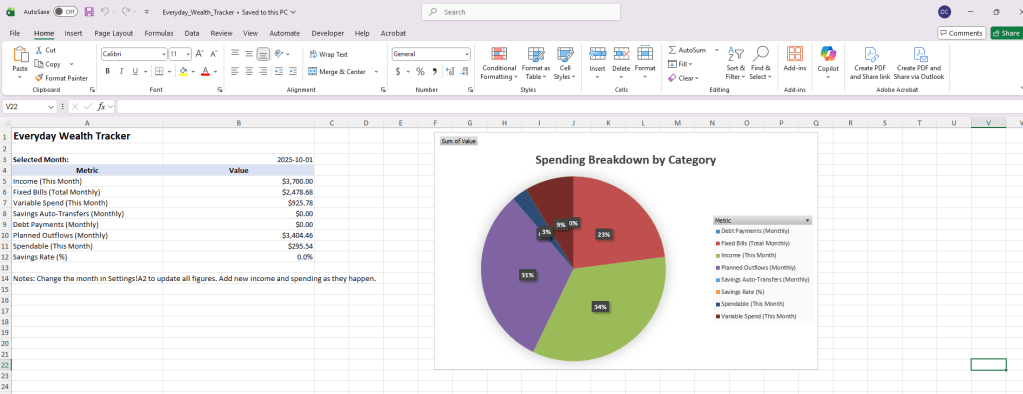
    If you want a money system that feels simple and calming instead of stressful, the Everyday Wealth Tracker helps you build those quiet wins with ease. It gives you a clear place to follow your money, plan your choices, and see your progress grow. No overwhelm. No confusion. Just a tool that helps you feel safe and in control.

    👉 Get the Everyday Wealth Tracker here and start building real peace

  • The truth is nobody rescued me. I built a simple system that finally stopped the leaks. You can do the same.

    There was a time when I thought debt payoff only happened after you landed a better job or caught a lucky break.

    I waited for a raise that never came.

    I prayed for a tax refund big enough to save me.

    But nothing changed until I realized something simple and honestly a little embarrassing:

    The math was not my main problem. My habits were.

    This is the story of how I paid off ten thousand dollars without a raise, without working overtime, and without turning my life upside down.

    It took patience, a few honest moments, and a system that kept me from slipping back into old patterns.

    And if you’re carrying debt right now, this story is really about you too.


    The moment that forced me to wake up

    One afternoon I tapped my card at the grocery store and braced myself.

    I had no idea what my actual balance was.

    I just hoped the machine would not beep at me.

    Instead of feeling grown and independent, I felt like a kid who lost control of their own life.

    On the walk to my car, something clicked.

    I was tired of fear.

    Tired of stress.

    Tired of pretending I would magically get better with money.

    Debt was not just a number.

    It was the weight behind every decision I made.


    Step 1: I wrote down every debt without flinching

    This part hurt.

    I sat on my living room floor with a notebook and wrote down every balance, interest rate, and due date.

    It felt like ripping off a bandage that had been stuck for years.

    But once everything was on paper, something surprising happened:

    I felt lighter.

    The unknown was worse than the truth.

    Once I saw the full picture, I finally knew what I was up against.


    Step 2: I stopped trying to fix everything at once

    I used to attack five goals at the same time.

    Save for emergencies.

    Pay off debt.

    Buy better groceries.

    Catch up on bills.

    Try to feel normal.

    That chaos kept me stuck.

    So I chose one debt.

    Only one.

    The smallest balance I had.

    I focused on that single target until it disappeared.

    When it was gone, I took the money I used for that debt and rolled it into the next one.

    It felt like pushing a snowball across fresh snow.

    Every step made it bigger and easier to push.


    Step 3: I built a simple weekly routine

    Every Sunday I sat with my notebook for five minutes.

    Not an hour. Not a whole afternoon.

    Just five calm minutes to update numbers and adjust the plan.

    That tiny routine changed everything.

    It kept me honest.

    It kept me aware.

    It stopped me from drifting back into old spending habits.

    Debt payoff was no longer a big emotional battle.

    It turned into a quiet weekly habit.


    Step 4: I made peace with slow progress

    Nobody talks about how boring debt payoff is.

    Some weeks it felt like nothing moved.

    But slow progress is still progress.

    It is the kind that actually lasts.

    I learned to celebrate small wins.

    A twenty dollar payment.

    A balance dropping by a little.

    A month without adding new debt.

    Those little wins built my confidence.

    Confidence built consistency.

    Consistency built freedom.


    Step 5: I tracked where every dollar went

    I did not cut everything.

    I did not punish myself.

    I did not live like a monk.

    I simply watched my money.

    Imagine trying to fix a car while wearing a blindfold.

    That was my financial life before tracking.

    When I finally started tracking my spending, the blindfold came off.

    I realized exactly where my money was leaking out.

    Plugging those leaks is what paid off the debt faster than I expected.


    What paying off ten thousand dollars taught me

    I learned that freedom does not come from a bigger paycheck.

    It comes from a better plan.

    I learned that discipline is not punishment.

    It is self respect.

    And I learned that debt loses its power the moment you face it with honesty and a real system.

    If you are in that place right now feeling overwhelmed and unsure where to start, I want you to hear this clearly:

    You do not need to be perfect.

    You just need to begin.


    Ready to start your own debt free story?

    The turning point in my journey was the day I stopped guessing and started tracking everything in one simple place.

    If you want a tool that helps you organize your income, bills, spending, and debt payoff in a clear way that actually feels doable, my Everyday Wealth Tracker can help you get there.

    It is the same style of system that helped me stay consistent long enough to change my life.

    👉 Get your Everyday Wealth Tracker here

    Your future self is waiting for you.

    Start today with one small step.

  • Break the stress cycle and make the season feel joyful again

    The holidays are supposed to feel warm and magical, but for a lot of us, they feel like a financial storm.
    You start with good intentions, then suddenly the cart is full, the card balance climbs, and the guilt creeps in.
    It is hard to feel festive when you are wondering how long it will take to recover.

    But here is the truth most people never hear:
    You can give, celebrate, and enjoy the season without wrecking your finances.
    You just need a simple plan that protects your money and your peace at the same time.

    Let’s make this year different.


    Step 1: Start With a Real Number, Not a Wish

    Most people begin holiday shopping by guessing what they will spend.
    But that guess turns into emotional spending fast.

    Pick your number.
    A real number.
    A number that lets you breathe in January.

    Picture it like packing a suitcase.
    If you pack without limits, the suitcase explodes.
    If you pack with intention, everything fits and nothing gets crushed.

    Your holiday budget works the same way.


    Step 2: Make a Gift List You Can Actually Stick To

    Write down every person you plan to buy for.
    Then give each one a spending limit.

    When you do this on paper, something powerful happens.
    Your money stops feeling wild.
    Your emotions calm down.
    You finally see what is realistic instead of reacting in the moment.

    This is how you avoid those last minute panic purchases that drain your account.


    Step 3: Use the Rule That Saves You From Overspending

    Here is the rule:
    If it is not on your list, it is not in your cart.

    Impulse buying is the real holiday wallet killer.
    Marketers know you are emotional during this season.
    They put “special deals” everywhere because they know you are vulnerable.

    Your list protects you.
    Your list is your shield.


    Step 4: Choose Joy Over Pressure

    The holidays are not a performance.
    They are not a competition.
    They are not a chance to prove anything to anyone.

    Simple, thoughtful gifts mean more than expensive ones that leave you stressed later.

    Some of the best memories cost nothing.
    A slow night with hot chocolate.
    A handwritten letter.
    A cozy movie at home.

    Money does not create meaning.
    Presence does.


    Step 5: Track Your Spending as You Go

    This is the step that keeps you safe.

    You can have the best intentions, but without tracking, the numbers still slip.
    And when the numbers slip, the stress returns.

    Give yourself five minutes at the end of each shopping day to update everything you spent.
    You will feel a sense of control you may not have felt in years.

    Think of it like checking your GPS during a long drive.
    It keeps you on the road you actually want to be on.


    The Season Feels Better When Your Money Feels Safe

    You deserve a holiday that feels calm, joyful, and financially peaceful.
    Not rushed.
    Not pressured.
    Not followed by regret in January.

    And if you want help staying grounded, I built something for you.


    Build a Peaceful Holiday Plan With the Everyday Wealth Tracker

    If you want your holiday spending to stay intentional instead of chaotic, the Everyday Wealth Tracker can help you stay organized through the entire season.

    It gives you one clean place to map out:
    • Your holiday budget
    • Your gift list
    • Your spending totals
    • What you still have left
    • How to stay on track without stress

    If you want your money to feel calm during the holidays, this is your tool.

    👉 Get the Everyday Wealth Tracker here

    Make this year the one where you enjoy the holidays without financial fear.

  • A fast and calm way to see where your money goes so you can finally feel in control again

    Most people do not track their spending because they think it needs fancy apps or confusing spreadsheets. The truth is much simpler. You can build a clean, easy dashboard in the next fifteen minutes that shows exactly where your money is going. No stress. No chaos. Just clarity you can actually use.

    Think of this dashboard like turning on a light switch in a messy room. The mess does not magically disappear, but you can finally see where everything is. And once you can see, you know what to fix.

    This is the same kind of dashboard people use to feel calm with their money instead of scared of their balance. You can create it today.


    Why a Spending Dashboard Changes Everything

    When your money feels out of control, it is usually not because you are “bad with money.”
    It is because your money is happening in the dark.

    A dashboard gives you a single view of your cash flow.
    One place where:
    • You see what came in
    • You see what went out
    • You see what is left
    • You see which habits help you and which ones drain you

    It is simple, but it is also powerful.
    Clarity removes fear.
    And fear is the main reason people avoid their finances.


    Let’s Build Your Dashboard in 15 Minutes

    Grab Google Sheets or Excel and follow these four steps. Keep it simple. You are creating clarity, not perfection.


    Step 1: Create Three Main Columns

    In a blank sheet, label three columns:

    • Date
    • Description
    • Amount

    This alone will catch everything that flows in and out.
    Your dashboard starts here.


    Step 2: Add a Category Column

    Label a fourth column Category.

    Use simple categories like:
    • Groceries
    • Eating out
    • Transportation
    • Personal care
    • Bills
    • Fun
    • Savings

    You do not need fifty categories. Too many labels creates confusion. Keep it light and clean.


    Step 3: Add a Summary Section at the Top

    At the very top of your sheet, create a small box that shows your totals:

    Total Income
    Total Spending
    Total Savings
    Top Spending Category

    These numbers give you instant awareness.
    It feels like checking your car dashboard while driving. You know your speed, your fuel, and your direction. Without that, you are guessing.

    Use simple formulas:
    • Sum income.
    • Sum expenses.
    • Highlight the category you spend the most in.

    This takes two minutes and makes the whole thing feel real.


    Step 4: Color Code Your Categories

    Add a soft color to each category so your eyes can catch patterns fast.

    For example:
    Green for groceries.
    Blue for bills.
    Yellow for fun money.
    Red for overspending.

    Once you do this, your dashboard becomes a story. A visual story of how you spend and save.

    This is why dashboards work. They take something overwhelming and turn it into something you can read in seconds.


    In Less Than 15 Minutes, You Built a System Most People Never Create

    Most people live their entire lives without knowing where their money goes. They guess. They hope. They panic when things get tight.

    You are different now. You chose to understand.
    And once you see the truth, change becomes easier.

    This is how people build real financial confidence.
    Not by being perfect.
    Not by earning six figures.
    But by finally understanding their own patterns.


    Want a Ready Made Dashboard That Does All of This For You?

    If you want a clean, easy dashboard that already has income tracking, spending summaries, color coding, and built in formulas, the Everyday Wealth Tracker can save you hours.

    It is simple to use.
    It gives you peace fast.
    And it helps you feel in control of your money instead of guessing where it went.

    If you want a tool that supports the habits you are building, you can get it here:

    👉 Get the Everyday Wealth Tracker

  • If you are tired of wondering where your paycheck went, your answer is probably hiding in one of these four traps

    Money does not disappear. It gets assigned, whether you meant to assign it or not.

    Most people swear they do not spend much, yet their money slips away faster than water in cupped hands. It is not because they are bad with money. It is because four silent budget categories eat income faster than anything else.

    Once you understand these four, your entire financial life clicks into place. You stop guessing. You stop blaming yourself. You finally see the leaks.

    Let’s break them down.


    1. Housing Costs

    Rent or mortgage payments usually take the biggest bite. You know that part, but here is the real trap:

    Most of us do not choose a home based on our money goals. We choose it based on vibes, emotions, or pressure to look like we are doing well. One move, one upgrade, one “nicer area,” and suddenly half your paycheck is gone.

    Fix:
    Choose living space based on how it supports your life, not your ego. A smaller place can feel like a setback, but it frees your future. What feels uncomfortable today buys peace tomorrow.


    2. Food and Eating Out

    Food is sneaky because it feels necessary. You are not buying diamonds. You are buying lunch. It does not feel expensive.

    But meals, drinks, snacks, and delivery fees quietly become a second rent payment.

    Fix:
    Pick one rule you can stick to. Try home lunches during the week or coffee only on weekends. You do not need a meal plan. You need one boundary.


    3. Transportation

    Car payments, gas, insurance, rideshares, repairs. It feels like freedom, but it can chain you to your paycheck.

    Most people drive a car that reflects the life they wish they had, not the one they actually have. It is a financial costume that costs hundreds every month.

    Fix:
    Buy your next car with your future in mind, not your feelings. The best car is the one that gets you to your goals faster, not the one with more features.


    4. Subscriptions and Sneaky Recurring Costs

    These are the budget termites. Streaming, apps, memberships, upgrade fees. Ten dollars here. Fifteen there. You forget you signed up. Companies count on that.

    Fix:
    Review everything once a month. Keep what adds value to your life. Cancel what only adds noise.

    You will feel richer in minutes.


    The Real Point

    Your money is not disappearing because you lack discipline. It is disappearing because you never saw the patterns.

    Once you tame these four categories, everything changes:

    Your paycheck stretches farther
    Your stress drops
    And your goals finally get funded

    This is the moment where your financial story shifts from chaos to choice.


    If You Want Help Doing This Without Guessing

    This part is simple. Most people stay stuck because they try to remember everything in their head.

    You will not out-discipline a broken system. You need a plan that shows you the truth every time you get paid.

    That is why I built the Everyday Wealth Tracker. It shows your spending, goals, income, and priorities in one place. No guilt. No confusion. Just clarity and control.

    If you want your money to finally work for you, start here:

    👉 Get the Everyday Wealth Tracker

    Your money is already powerful. It just needs better instructions.

  • If your income goes up but your bank account never does, this is why.

    Most people think more income solves money problems. It doesn’t.

    A raise feels exciting for about two minutes… until life gets louder, spending gets faster, and somehow your account balance looks exactly the same.

    You don’t have an income problem. You have a structure problem.

    Your money needs a job before it hits your account. If it doesn’t have orders, it drifts into impulse buys, eating out more, and that “harmless” subscription you forgot you signed up for.

    The Real Problem Isn’t Income

    The real enemy is lifestyle creep.

    Lifestyle creep is when your spending rises right along with your income. It happens quietly, like water seeping under a door. One day you look up and nothing has changed. Except now you have nicer shoes, more Amazon boxes, and no savings.

    This is why most people stay stuck, even when they make more.

    The Cure: The Assignment Budget

    There is only one budget format that protects you after a raise, a bonus, or a new side hustle:

    Every dollar gets an assignment before you spend it.

    Not after. Not “later tonight.” Not “once I see what I have left.”

    Before.

    Think of your money like employees. If you don’t give them jobs, they wander off, take long breaks, and disappear.

    A budget that works after your income grows isn’t about restriction. It is about direction.

    Here’s What It Looks Like

    When new money comes in, divide it like this:

    1. Fixed life costs – rent, food, bills
    2. Future you – savings, investments, debt payoff
    3. Freedom fund – guilt free spending

    Your income increases, but your system stays the same. That is how wealth grows.

    Because the money you plan is the money you keep.

    Why This Works So Well

    When your spending habits stay stable but your income climbs, the gap between them becomes your wealth engine. That gap is where savings grow, debt disappears, and opportunities show up.

    If you let that gap close, you get stuck forever.

    If you guard it, you win.

    The Biggest Mistake People Make

    They upgrade everything at once.

    New job? New apartment. New phone. New wardrobe. New car.

    Then surprise… there is no surplus left.

    Income can change your lifestyle.

    A plan changes your life.


    The Transformation You Want

    Imagine this:

    • Your bills are paid before the due date
    • Your savings stack without effort
    • Debt melts month after month
    • Your income increases and finally means something

    This is what a planned paycheck feels like.

    It gives you confidence. It gives you calm. It gives you choices.

    If You Want Help Building This System

    My Everyday Wealth Tracker shows you exactly how to assign your income so you never lose money to random spending again. It turns your raise or side hustle into real progress, not just more purchases.

    If you ever wondered why making more hasn’t changed your life yet, this is the missing piece.

    👉 Get the Everyday Wealth Tracker here and give your money a plan that actually works

    Your income can unlock your dreams, but only if you tell it where to go.

  • The hidden emotional trap that keeps people stuck, broke, and afraid to look at their mone

    Most people do not quit budgeting because they lack income.

    They quit because they feel ashamed of what their bank account might reveal.

    Let’s be honest. Money feels personal. It is not just numbers. It feels like a report card on your life, your choices, your worth. So when someone suggests budgeting, many people hear something else:

    “You failed.”

    And nobody wants to look at something that makes them feel like a failure.

    But here is the truth no one tells you:

    Budget shame is not a money problem. It is a self worth problem disguised as math.


    Why Shame Shows Up Around Money

    Shame sneaks in when you believe your spending mistakes say something about who you are instead of what happened.

    It sounds like:

    • “I should be further along by now.”
    • “Everyone else knows what they are doing.”
    • “Why can’t I get it together?”
    • “If I look at the numbers, I will feel worse.”

    So what do people do?

    They avoid.
    They guess.
    They swipe.
    They hope next month magically feels different.

    Avoidance feels safe in the moment, but it quietly drains your future.


    Budgeting Is Not a Punishment

    Most people imagine budgeting like a strict diet:

    “No fun.”
    “No buying anything I love.”
    “No room to breathe.”

    Of course that feels awful. Who wants a life where guilt sits in every purchase?

    But budgeting is not restriction. Budgeting is direction.

    A budget is not a cage. It is a map.

    It shows you:
    What you can afford, what you want, and how to get there without stress.

    People do not hate budgets. They hate feeling judged by them.


    Your Income Is Not the Real Problem

    People will say:

    “If I made more, I would be fine.”

    But there are people making $40k who have control and peace. There are people making $140k who are drowning.

    The difference is not the income.
    The difference is awareness.

    You cannot fix what you will not face. You cannot improve what you refuse to measure.

    Your money will not respect you if you never look at it.


    Shame Ends the Moment You See the Truth

    Something magical happens when you finally track your spending.

    You stop guessing.
    You stop blaming yourself.
    You stop feeling like a failure.

    You see patterns instead of problems.
    You see choices instead of chaos.

    And for the first time, you feel powerful.


    The Real Enemy Was Never Your Money

    It was the story you told yourself about it.

    Once you change that story, budgeting becomes the tool that sets you free.

    Not because it is perfect.

    Because it is honest.

    And honesty gives you something shame never will:

    control


    If You Want To Win With Money, Do This Today

    Not tomorrow. Not when you earn more. Not when life magically feels easier.

    Track one week of spending.

    You will see things you never noticed.
    And your confidence will grow faster than your shame can keep up.

    The hardest part is starting. The easiest part is continuing once you finally see the truth.


    Ready for the Next Step

    If you want a simple system that removes the shame, shows you exactly where your money goes, and helps you build confidence one week at a time, my Everyday Wealth Tracker can help.

    It takes the fear out of money and replaces it with clarity you can feel in your chest. When you know the truth, you stop running from it.

    Your finances should not make you anxious. They should make you proud.

    👉 Grab the Everyday Wealth Tracker here and start winning with your money today

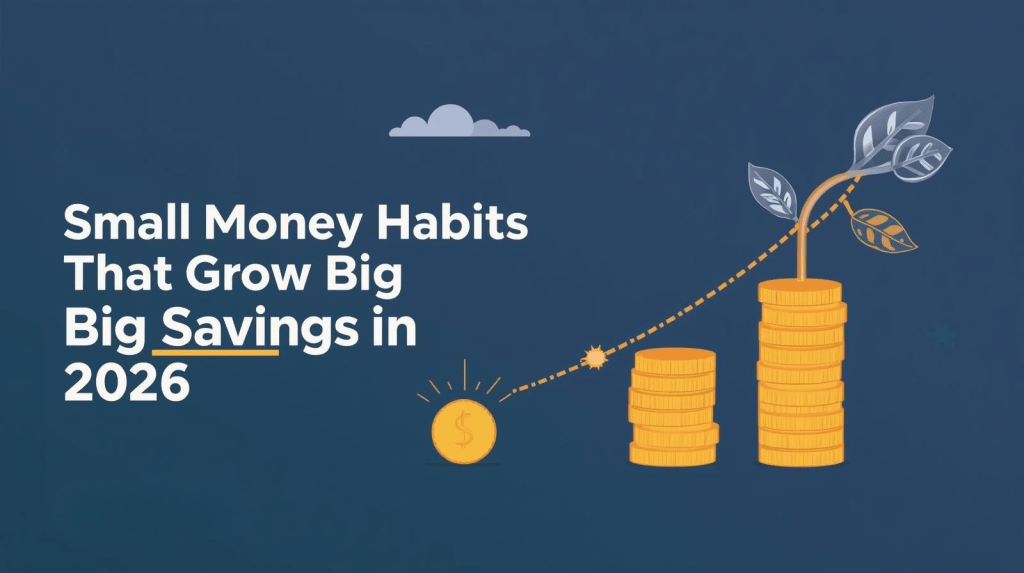
  • Tiny Choices. Massive Results. This is how ordinary people turn pocket change into peace of mind.

    Most people think you need a big income to save big money. You don’t. You need small habits that stack on top of each other until your bank account looks like someone who always knew what they were doing.

    Saving money isn’t one giant leap. It’s a series of quiet steps that no one celebrates but your future self will thank you for.

    Think of your financial life like a snowball at the top of a hill. You don’t push it once and walk away. You keep nudging it. Just a little. Every day. Before you know it, the thing is rolling so fast you can barely keep up.

    That is how wealth works.


    Why Small Habits Matter More Than Willpower

    If motivation built wealth, everyone would be rich.

    Money grows through repetition. Not excitement. Not hype. Not waiting for the perfect time. A five dollar habit, a ten minute review, a moment of mindfulness before you swipe your card… those are the seeds that turn into real savings.

    Your brain loves patterns. Once you create a routine that feels natural, it becomes easier to keep money than lose it.

    You do not need a miracle. You need momentum.


    The Habits That Actually Work

    Here are the small habits that compound:

    1. Pay Yourself First

    Before bills. Before brunch. Before your impulses.

    You are your first obligation. Even if it is five dollars, get in the habit of keeping something.

    If you can protect the first five dollars, you can protect the next fifty.

    2. Name Your Dollars

    Money without a job wanders around until it disappears. Money with a purpose stays put.

    Assign every dollar somewhere. Savings. Debt payoff. A future trip. Your peace.

    Direction beats confusion every single time.

    3. Check Your Numbers Once a Week

    This is where most people fail.

    You would never drive a car without looking at the dashboard. Yet people run their financial life blind and then wonder why they crash.

    Ten minutes can save you hundreds.

    4. Automate What You Can

    Discipline is great. Automation is better.

    When your savings move without your permission, you win on autopilot.

    Rich or broke, the person with systems always wins.

    5. Honor Your “No”

    You don’t need to say yes to every impulse, every sale, every invitation.

    Your “No” is not punishment. It is protection.


    Why This Works

    Money habits shape identity.

    The moment you start acting like someone who keeps money, your brain begins to believe you are someone who deserves it. That shift is bigger than any paycheck.

    Your bank balance is not proof of your worth. It is proof of your habits.


    The Truth No One Likes to Admit

    Big savings do not come from huge wins. They come from boring decisions that no one applauds.

    You don’t see the magic the first week. Or even the second. But then one day, something clicks:

    Your account has grown.
    Your stress has eased.
    Your life feels lighter.

    Not because you got lucky. But because you chose consistency over chaos.


    If You Want This to Work in 2026, Do This Tonight

    Pick one small habit.
    Not five.
    Not ten.
    Just one.

    Once that becomes automatic, add another. Then another. Soon the habits stack. The numbers shift. Your life changes.

    People do not get wealthy by accident. They build systems that protect their progress.


    Ready To Make This Real?

    If you want a simple system that shows you where your money goes, what habits are working, and where your savings can grow next, the Everyday Wealth Tracker gives you the structure you have been missing.

    It turns your habits into results you can see. Not someday. Not next year. Now.

    👉 Get your Everyday Wealth Tracker here

    Start small. Stay consistent. Watch your life change.

  • Stop guessing where your money goes and start deciding what it does.

    Most people want financial confidence, but they think it comes from earning more. It doesn’t. Confidence comes from knowing what every dollar will do before it even hits your bank account.

    Think about a pilot. They would never take off without a flight plan. Yet most people start their pay period with no plan, then wonder why they end up lost in the clouds. That is why payday feels exciting for 24 hours and stressful for the next thirteen days.

    Money without a plan becomes noise. Money with a plan becomes power.

    Why Most Budgets Fail

    People think budgeting means restriction. That is why they quit. But a real money plan does not take away fun, it gives direction. It tells your dollars where to go so they help you get what you want.

    A budget is not punishment. It is a map.

    Once you see that, everything changes.

    The Secret Tool Nobody Teaches You

    It is not a magic app. It is not some complicated financial system.

    It is something simple:

    A pre-paycheck template that tells your money what to do before you ever spend it.

    Once you do that, you:

    • Stop feeling guilty when you spend
    • Stop wondering if you can afford something
    • Stop relying on memory to manage your bills
    • Stop hoping for change and start creating it

    This template is a plan that greets your paycheck at the door and gives it instructions.

    The Real Reason This Works

    Your brain wants clarity. It hates guessing. When you track where your dollars are going, you stop living in uncertainty. You stop reacting. You start choosing.

    It feels like switching from driving in a storm to driving with clear skies. You still have to steer, but you can finally see the road.

    The Everyday Wealth Tracker

    This is the exact tool I created for myself when I was tired of financial chaos. It is a simple system that helps you:

    ✔ list your expenses without overthinking
    ✔ assign categories to your money before payday
    ✔ see how much you can save or invest
    ✔ get a real view of your financial life

    There is no judgment, no shame, no complex math. Just clarity and direction. Think of it like giving every dollar a job instead of letting it roam free.

    Once you see how your money behaves on paper, you stop feeling scared of it. You start feeling in control.

    Your Next 10 Minutes Can Change Everything

    Do this today:

    1. Write down your next paycheck amount
    2. List your fixed expenses
    3. Assign amounts to savings, investments, and goals
    4. Give every remaining dollar a purpose

    It feels small, but it is the beginning of something big. A system that works does not overwhelm you. It supports you.

    The Most Surprising Part

    You do not need more income to feel confident. You need structure.

    Once you take control of your money, life opens up. Decisions feel lighter. Opportunities feel real. You start living from intention, not reaction.

    This is not about spreadsheets. It is about peace.


    Ready to Use the Template?

    If you want to stop guessing and start deciding, get the Everyday Wealth Tracker. It is the same tool I use before every paycheck, and it will help you plan your money with confidence instead of anxiety.

    Click here to get it and start your financial reset

    Do not wait for the “right moment.” Confidence starts when you take control. Your money is waiting for instructions. Now you finally have a way to give them.

  • Take one month to create a financial foundation that feels clear, calm, and completely in your control

    Have you ever decided to “get your money together,” only to quit a week later because it felt confusing, overwhelming, or boring? You are not alone. Most people do not struggle with money because they lack intelligence. They struggle because they have never been taught how to build a system that actually supports them.

    Money without a system is like water without a container. It slips through your fingers, disappears fast, and leaves you wondering where it all went. A system gives your money a destination. It gives your future a shape.

    The next 30 days can change the way you handle money for the rest of your life. Not because you will earn more, but because you will finally understand what your money is doing and why.

    Let’s build something that lasts.


    Step 1: See Where You Stand

    Most people guess their finances. They feel broke or stressed without understanding why. The first step is simply seeing the truth.

    Take one evening and gather:

    • Bank statements
    • Credit card bills
    • Paychecks
    • Subscriptions

    You are not judging yourself. You are learning the layout of your financial house. You cannot fix a room you refuse to enter.

    This moment alone gives many people more peace than an extra paycheck.


    Step 2: Assign Every Dollar a Purpose

    Money with no purpose gets lost. Money with a job builds a future.

    You do not need spreadsheets full of formulas or complicated apps. You need a simple plan that tells your money what it is doing before it leaves your account.

    Think of your dollars like workers. If you do not assign them tasks, they wander off. If you tell them exactly what to do, they build something for you.

    This is how financial confidence begins.


    Step 3: Track Your Progress

    Most plans fail because people do not track what is happening. Tracking is not punishment. It is awareness.

    Imagine driving across the country without a map. You might get there eventually, but you will waste time, gas, and energy. Tracking turns your money journey into a guided trip instead of a guessing game.

    Once you track for a few weeks, you start to notice patterns:

    • Where your money escapes
    • Which habits help or hurt
    • What can be changed without pain

    This is where the growth happens.


    Step 4: Automate What You Can

    Automation removes willpower from the equation. You do not have to stay motivated forever. You just need to set up systems that work even when you are tired.

    Automate:

    • Savings deposits
    • Minimum debt payments
    • Investments
    • Bill reminders

    Your future self will thank you for every decision you no longer have to make twice.


    Step 5: Celebrate Progress

    Most people quit because they do not notice they are winning. Your first $50 saved matters. Your first week of tracking matters. Every tiny decision builds the financial identity you are trying to become.

    Growth feels like nothing until it feels like everything.


    You Are One System Away From Peace

    Money problems are rarely money problems. They are system problems. When you build a structure that holds your finances, the chaos goes quiet. Suddenly you have breathing room. You sleep better. You make decisions from a place of strength, not stress.

    You do not need perfection. You need a plan that can survive real life.


    Ready for the Tool That Makes This Easy?

    If you want a simple plug and play system that shows you exactly where your money goes and how to build your financial foundation without feeling overwhelmed, grab the Everyday Wealth Tracker.

    It gives you:

    • Easy templates to track income, bills, and spending
    • A debt payoff map you can follow without confusion
    • A visual dashboard that shows progress in minutes
    • Peace of mind knowing your money finally has direction

    This is the tool that turns your 30 days into something permanent.

    👉 Get your Everyday Wealth Tracker here

    Start now, not later. The life you want is built by the habits you create today.